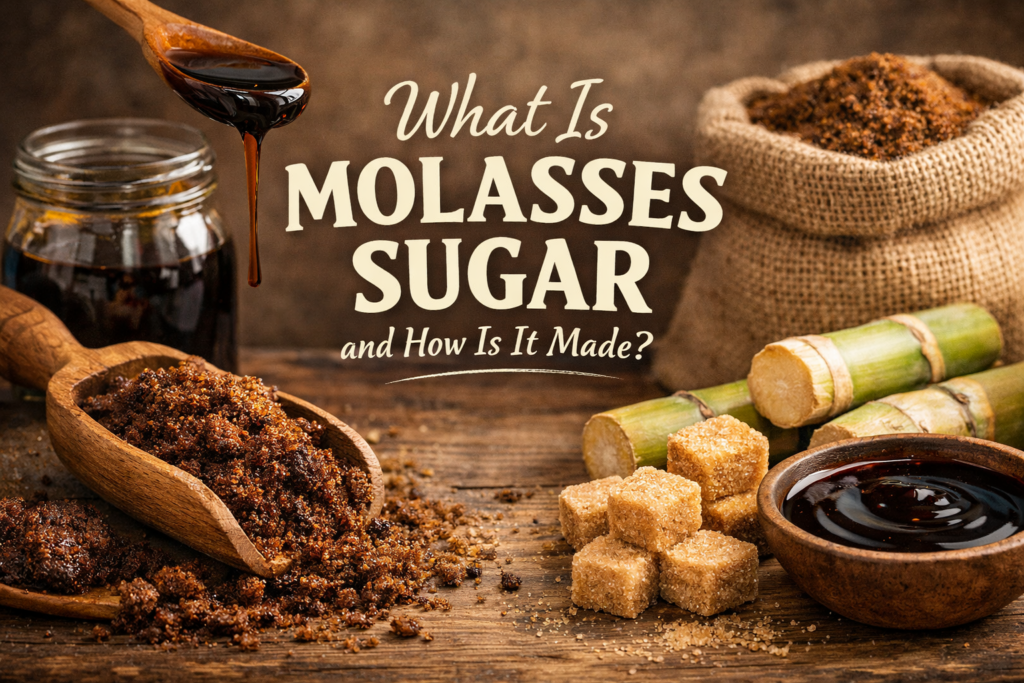
In today’s health conscious and ingredient aware market, consumers are paying closer attention to where their sweeteners come from and how they are produced. One such traditional sweetener that has regained attention is molasses sugar. Known for its deep color, rich flavor, and natural mineral content, molasses sugar stands apart from highly refined white sugar.
At Konsonetas, we believe in educating consumers about authentic ingredients and their origins. This guide offers a clear, professional, and practical overview of what molasses sugar is, how it is made, its types, uses, and why it continues to hold value in modern kitchens and food industries.
What Is Molasses Sugar?
Molasses sugar refers to sugar products that retain a natural portion of molasses, the thick, dark syrup created during sugar processing. Unlike refined white sugar, where molasses is completely removed, molasses sugar keeps part of this syrup, giving it a darker color, stronger aroma, and richer taste.
Molasses itself is a byproduct of sugar extraction from sugarcane or sugar beets. When sugar juice is boiled and crystallized, molasses remains after sugar crystals are separated. When this molasses is blended back with sugar crystals in controlled amounts, the result is molasses sugar.
This type of sugar is often valued for its slightly bitter, caramel like flavor and its trace mineral content, including iron, calcium, potassium, and magnesium.
The Origin of Molasses Sugar
Molasses sugar has a long history that dates back centuries. Before modern refining methods were introduced, most sugar consumed worldwide naturally contained molasses. Early civilizations relied on these unrefined or semi refined sugars for both sweetness and nutrition.
In regions such as Asia, Africa, and the Caribbean, molasses rich sugars have been a staple ingredient in traditional sweets, baked goods, and beverages. Even today, many cultures prefer molasses sugar because of its bold flavor and perceived natural benefits.
How Is Molasses Sugar Made?
The process of making molasses sugar involves several carefully controlled steps. While the technology may vary by manufacturer, the fundamental method remains consistent.
1. Harvesting Sugarcane or Sugar Beets
The process begins with harvesting mature sugarcane or sugar beets. Sugarcane is more commonly used for molasses sugar due to its natural flavor depth and aroma.
Once harvested, the raw material is transported quickly to prevent loss of sugar content.
2. Juice Extraction
The sugarcane or sugar beets are crushed or pressed to extract their juice. This juice contains water, sucrose, and natural impurities.
The extracted juice is then filtered to remove fibers and solid particles.
3. Clarification
The raw juice undergoes clarification, where it is gently heated and treated to remove unwanted impurities. This step ensures the final sugar is safe, clean, and consistent in quality.
4. Evaporation and Boiling
The clarified juice is boiled to evaporate excess water. As boiling continues, the juice thickens and sugar crystals begin to form.
At this stage, the mixture contains both sugar crystals and molasses.
5. Crystallization and Separation
The mixture is spun in centrifuges to separate sugar crystals from molasses. The liquid left behind is molasses.
For refined white sugar, molasses is completely removed. However, for molasses sugar, a measured amount of molasses is retained or reintroduced.
6. Blending and Drying
The sugar crystals are blended with molasses in precise proportions to achieve the desired color, flavor, and moisture level.
The final product is then dried, cooled, and packaged for distribution.
Types of Molasses Sugar
Molasses sugar is not a single product. It exists in different forms depending on the amount of molasses retained.
Light Molasses Sugar
This variety contains a small amount of molasses. It has a mild flavor and light brown color, making it suitable for everyday baking and sweetening beverages.
Dark Molasses Sugar
Dark molasses sugar has a higher molasses content, resulting in a deeper color and stronger taste. It is commonly used in gingerbread, sauces, and marinades.
Unrefined or Natural Molasses Sugar
This version undergoes minimal processing and retains most of its natural molasses. It offers the strongest flavor and highest mineral content.
Nutritional Profile of Molasses Sugar
While molasses sugar is still a form of sugar and should be consumed in moderation, it provides trace nutrients that refined sugar lacks.
It may contain small amounts of:
- Iron
- Calcium
- Potassium
- Magnesium
These minerals come from the molasses content, which is derived directly from the sugarcane or sugar beet plant.
Culinary Uses of Molasses Sugar
Molasses sugar is prized for its versatility and depth of flavor.
Baking
It adds moisture and richness to baked goods such as cookies, cakes, muffins, and breads.
Cooking
It is commonly used in sauces, glazes, and slow cooked dishes where a deep, slightly smoky sweetness is desired.
Beverages
Molasses sugar can enhance teas, coffees, and traditional drinks with a warm, rounded sweetness.
Traditional and Artisan Foods
Many traditional sweets and artisanal products rely on molasses sugar for authenticity and flavor complexity.
Molasses Sugar vs White Sugar
Understanding the difference between molasses sugar and white sugar helps consumers make informed choices.
Molasses sugar retains natural compounds that give it flavor, aroma, and color. White sugar, on the other hand, is highly refined and neutral in taste.
From a functional perspective, molasses sugar adds moisture and depth, while white sugar provides pure sweetness.
Why Molasses Sugar Is Gaining Popularity Again
As consumers shift toward minimally processed and transparent food ingredients, molasses sugar is experiencing renewed demand.
Its traditional production process, bold flavor, and natural appeal align well with clean label trends and conscious consumption.
Brands like Konsonetas focus on quality sourcing and responsible processing to meet this growing interest.
How to Store Molasses Sugar
Proper storage helps maintain freshness and texture.
- Store in an airtight container
- Keep away from moisture and direct heat
- Use a clean spoon to prevent clumping
When stored correctly, molasses sugar has a long shelf life.
Final Thoughts
Molasses sugar is more than just a sweetener. It is a reflection of traditional craftsmanship, natural processing, and rich flavor heritage. From its careful production process to its versatile culinary uses, molasses sugar continues to hold relevance in both modern and traditional kitchens.
At Konsonetas, we value ingredients that tell a story and deliver authentic taste. Molasses sugar is one such ingredient, offering depth, character, and a connection to time tested methods of food production.
Whether you are a home baker, a food professional, or a conscious consumer, understanding molasses sugar helps you appreciate the sweet choices you make.
Frequently Asked Questions About Molasses Sugar
1. Is molasses sugar the same as brown sugar?
Molasses sugar and brown sugar are similar but not always identical. Both contain sugar crystals and molasses, but the proportion of molasses and the processing method can differ. Molasses sugar often focuses on retaining a more natural balance of flavor and moisture.
2. Is molasses sugar healthier than white sugar?
Molasses sugar contains trace minerals such as iron, calcium, and potassium due to its molasses content. While it still should be consumed in moderation, it offers slightly more nutritional value than refined white sugar.
3. Can molasses sugar be used as a direct substitute for white sugar?
Yes, molasses sugar can replace white sugar in many recipes. However, it may slightly alter color, flavor, and moisture, which can enhance baked goods but may not suit every recipe.
4. Does molasses sugar affect baking texture?
Yes, molasses sugar adds moisture and depth, often resulting in softer textures and richer flavors. This makes it ideal for cookies, cakes, and breads.
5. Is molasses sugar suitable for beverages?
Molasses sugar works well in teas, coffees, and traditional drinks, providing a warm and rounded sweetness rather than a sharp sugary taste.
6. How long does molasses sugar last?
When stored in an airtight container away from heat and moisture, molasses sugar has a long shelf life and can remain usable for months without losing quality.
7. Why do brands like Konsonetas focus on molasses sugar?
Brands such as Konsonetas value molasses sugar for its authentic production process, natural flavor profile, and alignment with consumer demand for transparent and minimally processed ingredients.