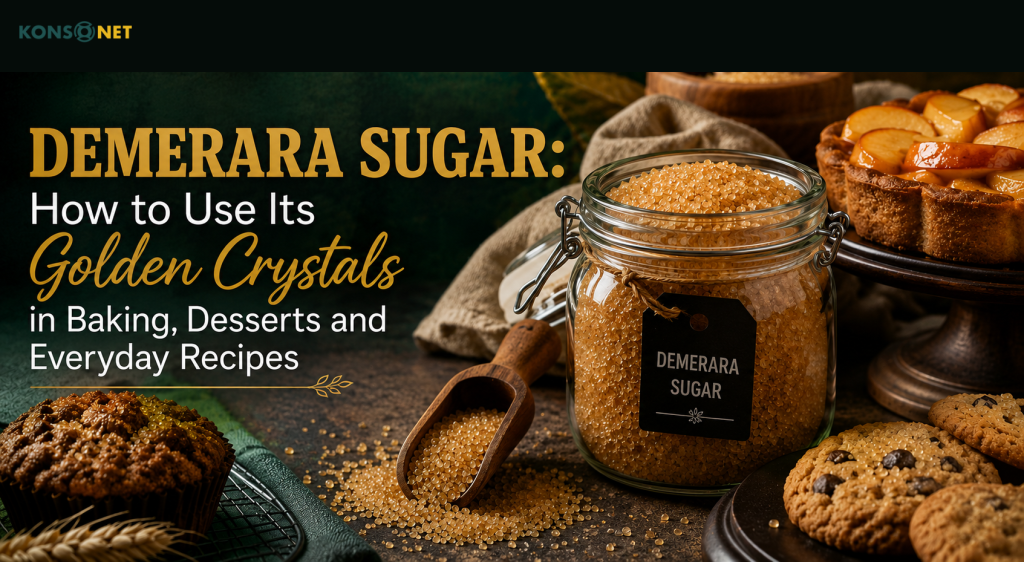
Choosing the right type of sugar can make a noticeable difference to the flavour, texture and appearance of homemade and professionally prepared food. While white granulated sugar is commonly used for everyday sweetening, different varieties of cane sugar offer distinctive characteristics that can improve particular recipes. Demerara sugar is one such option, recognised for its large golden crystals, mild caramel notes and naturally coarse texture.
Unlike finer sugars that dissolve quickly into mixtures, Demerara sugar offers additional culinary possibilities. Its crunchy crystals can create an appealing topping for baked goods, complement fruit-based desserts and add a subtle sweetness to hot beverages. It is particularly useful in recipes where the texture and appearance of sugar matter just as much as its sweetness.
For home bakers, understanding when to use Demerara sugar can help improve everyday recipes without requiring complicated preparation techniques. For professional bakeries, cafés, restaurants and food manufacturers, its distinctive characteristics provide opportunities to develop attractive products with a recognisable flavour profile.
This guide explores what Demerara sugar is, how its crystals behave in different recipes, where it works best and what to consider when storing and handling it.
What Is Demerara Sugar?
Demerara sugar is a type of light brown cane sugar characterised by its relatively large, coarse and golden-coloured crystals. It retains some molasses from the sugarcane processing stage, contributing to its characteristic colour and gentle caramel flavour.
Its appearance is one of its most recognisable features. Unlike fine white granulated sugar, Demerara has visibly larger crystals with a slightly sparkling surface. Depending on its production process, the crystals may have a light amber or golden-brown appearance.
The flavour is generally mild, with subtle notes reminiscent of caramel and toffee. This makes it suitable for recipes where a little additional flavour is desirable without overpowering the other ingredients.
Another important characteristic is its texture. The larger crystals provide a slight crunch when sprinkled over food or incorporated into certain baked products. This property makes Demerara different from finer varieties of brown sugar.
For people exploring different varieties of cane sugar, understanding the differences between Mauritius cane sugar varieties can help when selecting an ingredient for a particular culinary application.
Understanding Its Golden Crystals
The crystal structure is an important reason why Demerara sugar is popular in baking and food preparation.
Its larger granules do not disappear as quickly as fine sugar when exposed to moisture. Depending on the recipe, some crystals may retain a noticeable texture during baking, while others gradually dissolve as they come into contact with liquids and heat.
This behaviour creates several possibilities:
- Crunchy toppings: Crystals can develop a pleasant crisp texture on baked goods.
- Visible decoration: Their golden appearance creates an attractive finish.
- Gradual dissolution: Larger granules take longer to dissolve in beverages and mixtures.
- Flavour contribution: The natural molasses character adds mild caramel-like notes.
These characteristics make Demerara particularly useful when the recipe benefits from a visible sugar texture rather than complete dissolution.
How Demerara Sugar Influences Baking
Sugar performs several functions in baking beyond providing sweetness. It influences browning, moisture retention, texture and the development of the final product.
However, different sugar varieties behave differently depending on their moisture content, particle size and composition. Demerara’s coarse crystals make it especially useful in recipes where a textured finish is desirable.
1. Adding Crunch to Cookies and Biscuits
Cookies and biscuits are among the most practical applications of Demerara sugar.
Sprinkling a small quantity over cookie dough before baking can create a lightly crunchy surface. The golden crystals also improve the visual appearance, making the finished cookies look more textured and appealing.
Demerara can also be incorporated into selected biscuit recipes. However, its larger crystals may dissolve more slowly than fine granulated sugar. This can influence the consistency of the dough and the way the biscuits spread during baking.
For example, a baker preparing shortbread biscuits can experiment with Demerara as a finishing ingredient to introduce a crisp exterior while maintaining the traditional buttery character.
It is important to distinguish between using it as a topping and replacing all the sugar in a recipe. These approaches can produce different results.
2. Creating Attractive Cake and Muffin Toppings
Demerara sugar works particularly well as a finishing ingredient for cakes and muffins.
Before placing a prepared cake or muffin mixture in the oven, a light sprinkling of crystals can create an attractive golden surface. Once baked, the topping may develop a slight crunch that contrasts with the softer interior.
It is useful for:
- Banana muffins
- Apple cakes
- Cinnamon muffins
- Fruit loaves
- Breakfast cakes
- Simple tea cakes
For example, a cinnamon apple muffin can benefit from a Demerara topping. The caramel-like flavour complements the fruit and spice, while the crystals provide a different texture from the soft muffin crumb.
The quantity should be adjusted according to the sweetness of the recipe. A light layer is often sufficient to create the desired effect.
3. Improving Crumbles and Fruit Desserts
Fruit crumbles are another excellent application.
When preparing an apple, pear or berry crumble, Demerara sugar can be added to the crumble topping to provide additional texture and a gentle caramel character.
Its coarse crystals work well alongside ingredients such as flour, oats, butter and cinnamon. During baking, the topping develops a golden appearance, while the combination of ingredients creates a contrast between the soft fruit filling and the crumbly surface.
Other suitable dessert applications include:
- Baked apples
- Fruit tarts
- Peach and pear desserts
- Berry-based puddings
- Crumble bars
- Baked fruit with cinnamon
For desserts containing naturally sweet fruits, Demerara can also be used selectively rather than adding large quantities of sugar to the entire preparation.
4. Enhancing Pastries and Baked Breakfast Products
Pastries, scones and breakfast baked goods can benefit from a crunchy sugar finish.
Demerara crystals can be sprinkled over selected pastry surfaces before baking. They provide an appealing appearance and a slightly crisp texture that contrasts with softer pastry layers.
Scones are a particularly suitable example. A small amount of Demerara on top can complement fruit, cinnamon or other flavour combinations.
It can also be used in:
- Sweet breakfast rolls
- Fruit scones
- Homemade granola bars
- Sweet pastry twists
- Oat-based breakfast bakes
When using it in laminated or delicate pastry recipes, bakers should consider whether the crystals may affect the intended surface texture.
Using Demerara Sugar in Everyday Desserts
Demerara is not limited to oven-based recipes. Its distinctive flavour and texture also make it useful in simple desserts prepared at home.
1. Sweetening Fresh Fruits
A small sprinkling of Demerara sugar can complement fruits with naturally sharp or acidic flavours.
Grapefruit, strawberries, apples and berries can be served with a light amount of sugar when additional sweetness is desired.
For a simple dessert, sliced apples can be combined with cinnamon and a little Demerara sugar before baking. The result is a warm fruit preparation with a pleasant caramel-like flavour.
It can also be used in fruit salads, although it is worth allowing sufficient time for the crystals to soften slightly before serving.
2. Adding Texture to Yoghurt and Breakfast Bowls
Plain yoghurt, porridge and breakfast bowls provide easy opportunities to use Demerara sugar.
A small amount sprinkled over natural yoghurt can add sweetness and a light crunch. It can be combined with:
- Fresh berries
- Sliced bananas
- Apples
- Oats
- Chopped nuts
- Cinnamon
For porridge, the crystals can be stirred into the warm preparation, where they gradually dissolve and contribute sweetness.
The amount of sugar should be adjusted to the natural sweetness of the other ingredients.
3. Preparing Simple Caramel-Flavoured Desserts
Demerara’s flavour makes it suitable for desserts that benefit from gentle caramel notes.
It can be incorporated into selected dessert toppings, fruit sauces and baked preparations. When heated with other ingredients, its sugar content participates in browning and flavour development.
However, it should not automatically be treated as a replacement for every type of sugar used in caramel or confectionery recipes. Crystal size, moisture and the behaviour of the complete mixture all matter.
For recipes requiring precise syrup consistency or controlled crystallisation, the specified sugar type should generally be followed.
Demerara Sugar in Tea, Coffee and Other Beverages
One of the simplest ways to enjoy Demerara sugar is by adding it to everyday beverages.
Its gentle caramel flavour complements the natural bitterness of coffee and the stronger character of some teas.
Coffee
Demerara sugar can be used in black coffee, espresso-based drinks and milk coffee.
The crystals dissolve gradually, depending on the beverage temperature and stirring. Its flavour works particularly well when the coffee has roasted or chocolate-like notes.
It is a useful alternative for people who want something different from ordinary white sugar in their daily coffee.
Tea
In tea, Demerara provides sweetness with a mild molasses character.
It can be added to black tea, spiced tea and other hot preparations. Allowing time for the crystals to dissolve helps distribute sweetness evenly.
Cold Drinks and Homemade Syrups
Coarse crystals are less convenient for cold beverages because they dissolve more slowly than fine sugar.
For iced tea, cold coffee and homemade drinks, dissolving the sugar in a small quantity of warm water first can produce a more consistent result.
This is particularly helpful when preparing beverages in larger quantities.
Demerara Sugar vs Other Sugar Varieties
Not every sugar is suitable for every recipe. Selecting the right type depends on the intended sweetness, texture, appearance and preparation method.
| Sugar variety | Main characteristic | Suitable applications |
| Demerara sugar | Large golden crystals and mild caramel flavour | Toppings, crumbles, cookies and beverages |
| Golden caster sugar | Fine crystals with a mild golden colour | Cakes, sponges and creamed mixtures |
| Molasses sugar | Moist texture and stronger molasses flavour | Rich cakes, puddings and selected desserts |
| White granulated sugar | Neutral flavour and consistent granules | General baking and everyday sweetening |
Demerara vs Golden Caster Sugar
Although both varieties can have a golden appearance, their textures and culinary uses differ.
Demerara has larger crystals, making it particularly suitable for crunchy toppings and decorative finishes.
Golden caster sugar has much finer granules. These dissolve more easily during mixing, making it more convenient for sponge cakes and recipes requiring a smoother batter.
Explore the differences in Mauritius golden caster sugar when selecting sugar for finer baking applications.
Demerara vs Molasses Sugar
Molasses sugar generally has a stronger flavour and a softer, moister texture than Demerara.
It is often selected for recipes where a deep, rich sweetness is required, such as certain fruit cakes, puddings and traditional baked goods.
Demerara, by comparison, offers a more subtle flavour and a coarser crystalline structure.
For recipes requiring stronger molasses notes, Mauritius molasses sugar provides another option to consider.
Can Demerara Sugar Replace Regular Sugar?
Demerara can replace regular granulated sugar in some recipes, but the result depends on how the sugar functions in the preparation.
For toppings, fruit dishes and certain cookies, substitution is generally straightforward.
However, it is not always the best direct replacement for fine sugar in delicate baking.
For example, sponge cakes often require sugar that incorporates smoothly into butter or egg mixtures. Large Demerara crystals may take longer to dissolve, potentially affecting the texture of the finished cake.
Consider the following guidelines:
- For toppings: Demerara is a suitable choice when a crunchy finish is desired.
- For cookies: It can work in selected recipes, although the texture and spread may change.
- For sponge cakes: Fine caster sugar is generally more suitable.
- For beverages: It can replace ordinary sugar, although dissolution may take longer.
- For fruit desserts: It can be used according to the desired sweetness and texture.
When adapting a recipe, measuring by weight rather than relying entirely on volume can help maintain consistency.
Demerara Sugar Cubes: A Convenient Alternative for Everyday Use
Granulated Demerara sugar is not the only format available for everyday sweetening. Demerara sugar cubes provide a convenient alternative, particularly for tea and coffee.
Their compact shape makes portioning straightforward, while their characteristic cane sugar flavour offers a different experience from conventional white sugar cubes.
They can also be served alongside hot beverages in cafés, restaurants and hospitality settings.
Another simple application is adding a cube to warm porridge and allowing it to dissolve gradually.
Businesses interested in this format can explore Demerara sugar cubes for additional product information.
The choice between granulated sugar and cubes depends on the intended application. Granulated sugar offers greater flexibility for baking and recipe preparation, while cubes provide convenient individual portions for beverages.
Storage and Handling Recommendations
Proper storage is important for maintaining the quality and usability of Demerara sugar.
Although dry sugar generally stores well, exposure to moisture can cause crystals to stick together or form lumps. Poor storage conditions may also introduce unwanted contamination.
The following practices can help maintain product quality.
1. Use Airtight Containers
After opening a packet, transfer the sugar into a clean, dry, airtight container when appropriate.
A sealed container reduces exposure to humidity and helps protect the product from external contamination.
2. Choose a Cool and Dry Storage Area
Store Demerara sugar away from direct sunlight, heat sources and damp environments.
A cool, dry pantry or suitable food-storage area is generally appropriate.
3. Avoid Introducing Moisture
Always use a clean and completely dry spoon when measuring sugar.
Introducing water or moisture into the storage container can cause crystals to stick together and make handling more difficult.
4. Keep It Away from Strong Odours
Sugar should be stored away from strongly scented ingredients and cleaning products.
Using a properly sealed container helps maintain its expected flavour and prevents the absorption of unwanted surrounding odours.
5. Check Product Condition Before Use
Before using stored sugar, check its appearance, smell and overall condition.
If the product shows signs of contamination or an unusual odour, it should not be used.
What Should Professional Food Businesses Consider?
For bakeries, cafés, restaurants and food manufacturers, choosing sugar involves more than selecting a preferred flavour.
Ingredient consistency, supply arrangements and suitability for the intended application are important considerations.
Crystal Size and Consistency
Crystal size influences how sugar behaves during mixing, baking and finishing.
Businesses producing muffins, cookies and crumble toppings may prefer a coarser crystal structure, while manufacturers producing smooth cake mixtures may require finer sugar.
Consistent particle size can also help maintain uniform product appearance across production batches.
Flavour Compatibility
Demerara’s mild caramel character can complement ingredients such as:
- Cinnamon and nutmeg
- Apples and pears
- Chocolate
- Coffee
- Oats
- Butter-based pastries
However, recipe developers should test the flavour balance before introducing it into large-scale production.
Product Specifications and Quality
Professional buyers should review relevant supplier documentation, including product specifications, origin information, packaging details and food safety documentation.
These details help businesses assess whether a particular sugar variety meets their production requirements.
Packaging and Supply Requirements
Packaging size, storage conditions, delivery arrangements and supply consistency should also be considered.
A bakery using Demerara occasionally may require smaller quantities, while a food manufacturer may need regular commercial supply.
For businesses sourcing cane sugar, selecting a supplier that can provide clear product information and consistent supply arrangements can simplify ingredient purchasing.
Conclusion
Demerara sugar offers more than everyday sweetness. Its golden crystals, coarse texture and mild caramel flavour make it a useful ingredient for a wide range of baking and food applications.
From crunchy cookie toppings and golden muffin finishes to fruit crumbles, breakfast bowls, tea and coffee, it provides opportunities to improve the flavour and appearance of familiar recipes.
Understanding its behaviour is equally important. Its larger crystals make it particularly suitable for finishing and selected textured preparations, while finer sugars may be more appropriate for recipes requiring smooth mixtures and rapid dissolution.
For home bakers and professional food businesses in Lithuania and other European markets, choosing the right sugar depends on the intended recipe, ingredient consistency and storage requirements.
By considering these practical factors, Demerara sugar can become a versatile ingredient in both everyday cooking and professional food preparation.
For more information about cane sugar products, sourcing options and ingredient specifications, visit Konsonetas.
Frequently Asked Questions (FAQs)
1. What is Demerara sugar used for?
Demerara sugar is commonly used for baking, dessert toppings, cookies, crumbles, muffins, fruit dishes and beverages. Its large golden crystals provide a crunchy texture and mild caramel-like flavour.
2. Can I use Demerara sugar for baking cakes?
Yes. Demerara can be used in selected cake recipes, particularly as a topping for muffins, fruit cakes and tea cakes. However, fine caster sugar is generally more suitable for delicate sponge mixtures because it dissolves more easily.
3. What does Demerara sugar taste like?
It has a mild caramel or toffee-like flavour with a gentle molasses character. Its flavour is generally less intense than that of darker, stronger-flavoured brown sugars.
4. Is Demerara sugar suitable for cookies?
Yes. It can be used in selected cookie and biscuit recipes. It is especially useful as a topping because its coarse crystals can create a crunchy exterior. When mixed into dough, it may influence the texture and spreading of the cookies.
5. Can Demerara sugar be used in coffee and tea?
Yes. It can sweeten both hot beverages and adds a subtle caramel character. Its larger crystals dissolve more slowly than fine sugar, so stirring may be necessary.
6. What is the difference between Demerara sugar and golden caster sugar?
Demerara sugar has larger crystals and a coarser texture, making it suitable for toppings and textured recipes. Golden caster sugar has finer crystals that dissolve more easily, making it suitable for cakes and smooth baking mixtures.
7. How should Demerara sugar be stored?
Store it in an airtight container in a cool, dry place away from direct sunlight and moisture. Use clean, dry utensils to prevent contamination and clumping.
8. Can Demerara sugar replace white granulated sugar?
It can replace white sugar in certain recipes, including beverages, fruit desserts and selected baked goods. However, its larger crystals and distinctive flavour may affect the texture and final result, so it is not an ideal direct replacement in every recipe.
9. Is Demerara sugar available in cube form?
Yes. Demerara sugar is also available in cube form, which is convenient for sweetening tea, coffee and other beverages. Sugar cubes can also be used in warm porridge and similar preparations.