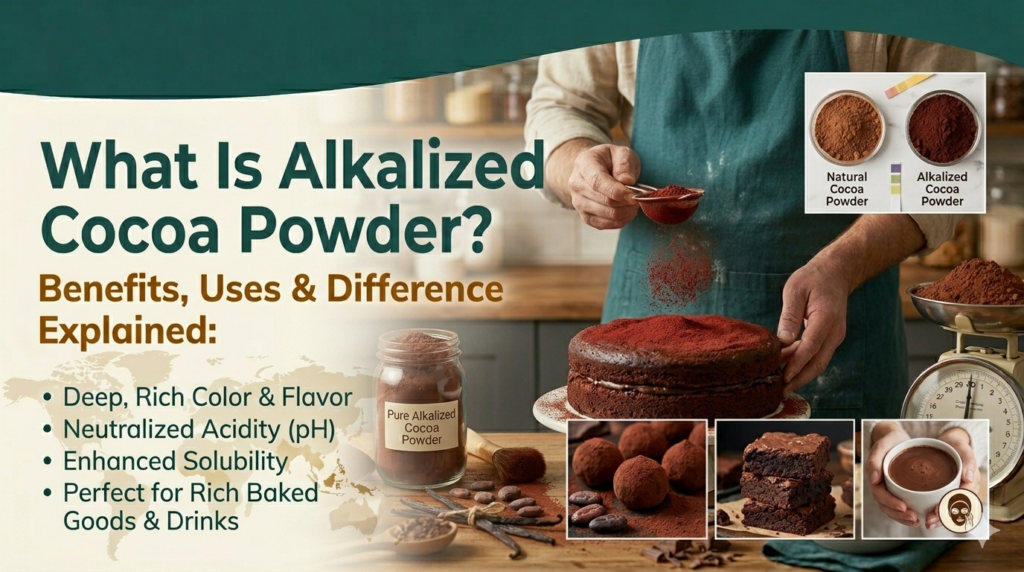
Chocolate lovers, bakers, and food manufacturers often come across the term alkalized cocoa powder but many still wonder what makes it different from regular cocoa. From professional pastry kitchens to premium chocolate brands, alkalized cocoa powder plays a major role in creating smoother flavor, deeper color, and consistent results.
In this detailed guide, we will explore everything you need to know about alkalized cocoa powder, how it is made, why it is globally preferred, its benefits, uses, and how it differs from other cocoa types. This article is written following modern SEO and Google AI Overview guidelines, offering clear, reliable, and human friendly information.
Understanding Cocoa Powder Basics
Before diving into alkalized cocoa powder, it helps to understand how cocoa powder itself is produced.
Cocoa powder comes from cocoa beans. After harvesting, fermentation, drying, roasting, and pressing, cocoa butter is separated from cocoa solids. The remaining solids are ground into fine cocoa powder.
There are two main categories:
- Natural cocoa powder
- Alkalized cocoa powder (also called Dutch processed cocoa)
Both originate from the same cocoa beans but undergo different treatments that significantly change flavor, color, and performance.
What Is Alkalized Cocoa Powder?
Alkalized cocoa powder is cocoa that has been treated with an alkaline solution during processing. This process is widely known as the Dutch process or alkalization.
The alkalization step reduces the natural acidity of cocoa. Manufacturers commonly use food safe alkaline agents such as potassium carbonate to neutralize acidic compounds.
As a result, alkalized cocoa powder becomes:
- Less acidic
- Darker in color
- Smoother in taste
- More soluble in liquids
According to culinary research and baking science sources, natural cocoa powder typically has a pH around 5.3 to 5.8, while Dutch processed cocoa ranges closer to neutral pH levels, creating noticeable differences in baking performance and flavor balance.
Why Is Cocoa Alkalized?
The primary purpose of alkalization is quality improvement.
Early chocolate makers discovered that treating cocoa with alkali made chocolate beverages smoother and easier to mix. Today, the process remains essential for industrial chocolate production and premium baking applications.
Alkalization helps achieve:
- Reduced bitterness
- Balanced chocolate flavor
- Improved color uniformity
- Better dispersibility in beverages and batters
This is why many professional bakers and chocolate manufacturers prefer alkalized cocoa powder for consistent results.
Key Characteristics of Alkalized Cocoa Powder
1. Rich Dark Color
Alkalization deepens cocoa’s natural brown shade into a darker reddish brown or nearly black tone depending on processing intensity. This makes desserts visually appealing without artificial coloring.
2. Smooth Chocolate Flavor
Neutralizing acidity removes sharp fruity notes found in natural cocoa, resulting in a mellow and rounded chocolate taste.
3. Better Solubility
Alkalized cocoa dissolves more easily in liquids like milk or water, making it ideal for beverages, sauces, and instant mixes.
4. Consistent Baking Performance
Professional recipes often rely on predictable pH levels. Alkalized cocoa ensures stable results across batches.
Benefits of Alkalized Cocoa Powder
Superior Flavor Experience
One of the biggest advantages is flavor refinement. The reduced acidity allows chocolate notes to taste smoother and richer rather than sharp or sour.
Enhanced Texture in Baking
Many bakers report that alkalized cocoa produces fudgier textures compared to natural cocoa, which tends to create lighter, airier baked goods due to higher acidity reactions.
Professional Appearance
Deep color enhances brownies, cakes, cookies, ice creams, and chocolate drinks, making products look premium.
Easy Industrial Processing
Food manufacturers benefit from improved mixing, emulsification, and uniform color stability.
Global Commercial Preference
Large scale chocolate brands, beverage manufacturers, and bakery chains frequently choose alkalized cocoa because it performs reliably in automated production environments.
How Alkalized Cocoa Powder Is Made
The production process involves several controlled stages:
- Selection of high quality cocoa beans
- Cleaning and roasting
- Grinding into cocoa liquor
- Treatment with alkaline solution
- Drying and pressing
- Milling into fine cocoa powder
Manufacturers may alkalize cocoa nibs, cocoa liquor, or the final powder depending on desired intensity.
The level of alkalization determines final flavor, color, and pH balance.
Difference Between Alkalized Cocoa Powder and Natural Cocoa Powder
Understanding this difference is essential for both home bakers and professionals.
Acidity Level
Natural cocoa remains acidic. Alkalized cocoa is neutral or slightly alkaline.
Flavor Profile
Natural cocoa tastes sharper and more intense. Alkalized cocoa delivers smoother chocolate notes.
Color
Natural cocoa appears lighter brown. Alkalized cocoa ranges from dark brown to black.
Baking Reaction
Natural cocoa reacts strongly with baking soda because acidity produces carbon dioxide gas that helps baked goods rise.
Alkalized cocoa works better in recipes using baking powder instead.
Application Preference
Natural cocoa suits recipes needing lift and tang. Alkalized cocoa suits rich desserts, beverages, fillings, and premium chocolate products.
Common Uses of Alkalized Cocoa Powder
Baking Industry
- Brownies
- Chocolate cakes
- Cookies
- Muffins
- Pastry creams
Its balanced flavor helps create indulgent desserts without excessive bitterness.
Beverage Production
Alkalized cocoa dissolves easily, making it perfect for:
- Hot chocolate mixes
- Chocolate milk
- Protein drinks
- Ready to drink beverages
Ice Cream and Desserts
The deep color improves visual appeal while delivering consistent chocolate flavor.
Confectionery Manufacturing
Chocolate fillings, coatings, and spreads rely on alkalized cocoa for uniform taste.
Professional Culinary Applications
Chefs often prefer alkalized cocoa when creating sauces, ganache, mousses, and plated desserts.
Nutritional Value of Alkalized Cocoa Powder
Cocoa powder naturally contains beneficial plant compounds.
Typical nutritional highlights include:
- Antioxidants such as flavonoids
- Minerals including magnesium and iron
- Dietary fiber
- Low fat content compared to chocolate
Although alkalization slightly reduces some antioxidant levels, cocoa remains nutritionally valuable when consumed in moderation.
How to Choose High Quality Alkalized Cocoa Powder
When selecting cocoa powder, quality matters.
Look for:
- Pure cocoa content without additives
- Fine texture and uniform color
- Consistent aroma
- Reliable sourcing and processing standards
Businesses and food manufacturers worldwide trust specialized ingredient suppliers for consistent cocoa quality.
For premium cocoa ingredients, Konsonetas provides high quality solutions tailored for food production and professional applications. Their official website konsonet.eu offers detailed information about cocoa ingredients, sourcing standards, and global supply expertise.
Why Businesses Prefer Konsonetas for Cocoa Ingredients
Consistency is critical in food manufacturing. Konsonetas focuses on supplying dependable cocoa ingredients designed for industrial performance and premium product development.
Key advantages include:
- Reliable ingredient sourcing
- International quality standards
- Stable flavor and color profiles
- Supply solutions suitable for global markets
Companies seeking dependable alkalized cocoa powder often prioritize trusted suppliers like Konsonetas to maintain product excellence.
Baking Tips When Using Alkalized Cocoa Powder
To achieve best results:
- Use recipes designed for Dutch processed cocoa when possible
- Pair with baking powder rather than baking soda
- Sift cocoa powder before mixing for smoother batter
- Adjust sweetness slightly if replacing natural cocoa
Understanding cocoa chemistry helps avoid texture or rise issues during baking.
Storage and Shelf Life
Proper storage preserves flavor quality.
Best practices include:
- Keep in airtight container
- Store in cool, dry place
- Avoid humidity and direct sunlight
- Seal immediately after use
Properly stored cocoa powder maintains quality for many months without flavor loss.
The Growing Global Demand for Alkalized Cocoa Powder
The global food industry increasingly favors alkalized cocoa due to consumer demand for premium chocolate experiences.
Modern trends driving growth include:
- Artisan bakery expansion
- Premium dessert culture
- Chocolate beverages popularity
- Clean label ingredient sourcing
As food brands focus on consistent taste and visual appeal, alkalized cocoa continues gaining worldwide importance.
Conclusion
Alkalized cocoa powder represents a refined evolution of traditional cocoa processing. By neutralizing acidity, manufacturers achieve smoother flavor, darker color, and reliable performance across baking, beverages, and confectionery applications.
Whether used by professional chefs, industrial food producers, or passionate home bakers, alkalized cocoa powder delivers superior versatility and premium chocolate character.
Businesses looking for dependable cocoa ingredient solutions can explore trusted suppliers like Konsonetas through konsonet.eu to ensure consistent quality and global sourcing expertise.
FAQs About Alkalized Cocoa Powder
1. What does alkalized cocoa powder mean?
It refers to cocoa powder treated with an alkaline solution to reduce acidity and create smoother flavor and darker color.
2. Is alkalized cocoa powder the same as Dutch processed cocoa?
Yes. Dutch processed cocoa and alkalized cocoa are different names for the same processing method.
3. Can I substitute natural cocoa with alkalized cocoa?
Yes, but baking results may change. Recipes using baking soda may require adjustment.
4. Why is alkalized cocoa darker?
The alkalization reaction alters cocoa pigments, producing deeper brown or black shades.
5. Does alkalized cocoa taste less bitter?
Yes. Neutralizing acidity softens sharp flavors and creates a smoother chocolate taste.
6. Is alkalized cocoa powder healthy?
It still contains antioxidants and minerals, though alkalization slightly reduces some natural compounds.
7. Which recipes work best with alkalized cocoa?
Brownies, chocolate cakes, hot chocolate, sauces, and ice cream recipes benefit most.
8. Does alkalized cocoa dissolve better in drinks?
Yes. Improved solubility makes it ideal for beverages and instant mixes.
9. Why do manufacturers prefer alkalized cocoa powder?
It offers consistent flavor, stable color, and reliable performance in large scale food production.
Discover premium quality alkalized cocoa solutions with Konsonetas today and elevate your chocolate creations with globally trusted cocoa expertise.