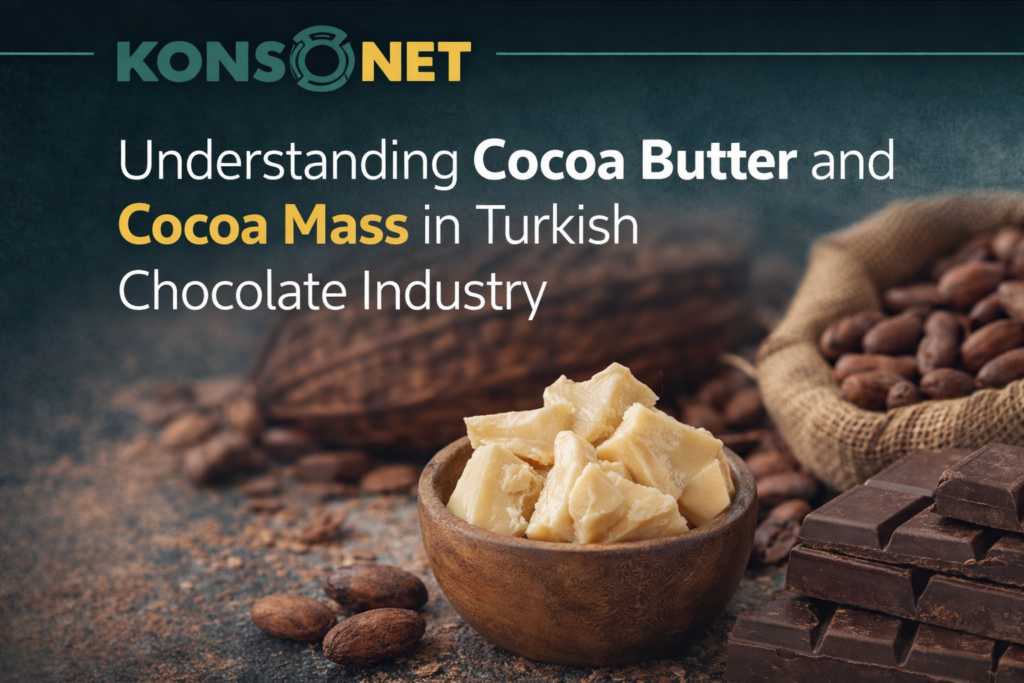
The Turkish chocolate industry has experienced remarkable growth over the past decade, driven by rising consumer demand, innovation in confectionery manufacturing, and increasing global trade opportunities. Behind every premium chocolate bar, praline, or couverture lies a delicate balance of two essential ingredients: cocoa butter and cocoa mass.
Understanding how these components function is vital for manufacturers, suppliers, and chocolate enthusiasts alike. From texture and flavor development to shelf stability and production efficiency, cocoa butter and cocoa mass define the identity of real chocolate.
As international ingredient suppliers such as Konsonetas continue supporting European and Turkish confectionery markets through high-quality cocoa solutions, understanding these raw materials becomes even more important for businesses seeking consistency, authenticity, and competitive advantage.
This comprehensive guide explores cocoa butter and cocoa mass in depth, specifically within the context of Turkey’s evolving chocolate industry.
The Growth of the Turkish Chocolate Industry
Turkey has become one of the fastest-growing confectionery markets connecting Europe, Asia, and the Middle East. Strategic geography, strong manufacturing infrastructure, and export-oriented production have positioned Turkish chocolate manufacturers as global competitors.
Market analyses indicate chocolate consumption and production across Turkey and nearby regions are expected to grow steadily in coming years, supported by innovation and new product formats.
Several key factors drive this growth:
- Expanding young population and urban consumption habits
- Increasing premium chocolate demand
- Rising exports to Europe, Gulf countries, and Africa
- Investment in ingredient technology and processing
At the center of this expansion lies one critical requirement: high-quality cocoa ingredients.
What Is Cocoa Butter?
Cocoa butter is the natural fat extracted from cocoa beans during processing. It plays a foundational role in chocolate manufacturing and determines how chocolate looks, melts, and feels.
Key Characteristics of Cocoa Butter
Cocoa butter provides:
- Smooth melting behavior near body temperature
- Glossy surface appearance
- Stable structure and snap
- Creamy mouthfeel
Industry suppliers highlight cocoa butter’s ability to stabilize products, emulsify fats, and enhance overall texture across chocolate applications.
In simple terms, cocoa butter is responsible for the luxurious sensory experience people associate with premium chocolate.
How Cocoa Butter Is Produced
The process includes:
- Harvesting cocoa beans
- Fermentation and drying
- Roasting
- Grinding into cocoa liquor
- Pressing to separate cocoa butter from solids
Once extracted, cocoa butter becomes an essential ingredient in dark, milk, and white chocolate formulations.
Interestingly, white chocolate contains cocoa butter but lacks cocoa solids, which explains its creamy taste without intense cocoa flavor.
What Is Cocoa Mass?
Cocoa mass, sometimes called cocoa liquor, is created by grinding roasted cocoa beans into a thick paste containing both cocoa solids and natural cocoa butter.
Unlike cocoa butter alone, cocoa mass carries the true chocolate flavor.
Composition of Cocoa Mass
Cocoa mass contains:
- Cocoa solids responsible for flavor and color
- Natural cocoa fat
- Aromatic compounds developed during roasting
Experts explain that cocoa mass essentially represents the whole cocoa bean in processed form, combining fat and solids before separation occurs.
This ingredient forms the backbone of dark and milk chocolate production.
Cocoa Butter vs Cocoa Mass: Core Differences
Understanding the distinction between these ingredients helps manufacturers optimize recipes and product performance.
| Feature | Cocoa Butter | Cocoa Mass |
| Main Function | Texture and melt | Flavor and color |
| Composition | Pure cocoa fat | Fat + cocoa solids |
| Taste Contribution | Neutral | Strong chocolate taste |
| Use in White Chocolate | Yes | No |
| Use in Dark Chocolate | Yes | Essential |
Both components originate from the same cocoa bean but serve different technological purposes.
Why Both Ingredients Are Essential in Chocolate Making
Chocolate cannot exist without balance between cocoa butter and cocoa mass.
Role of Cocoa Mass
- Provides deep cocoa flavor
- Adds natural bitterness and complexity
- Determines chocolate intensity
Role of Cocoa Butter
- Controls viscosity during processing
- Creates smooth melting experience
- Enables proper tempering and molding
Chocolate experts often describe chocolate as a carefully engineered matrix where cocoa butter forms the structure while cocoa mass defines taste.
Without sufficient cocoa butter, chocolate becomes dry and crumbly. Without cocoa mass, chocolate loses its authentic flavor profile.
Cocoa Processing and Technology in Turkey
Turkey’s confectionery sector combines traditional craftsmanship with modern industrial technology.
Manufacturers increasingly focus on:
- Advanced refining and conching systems
- Controlled tempering technologies
- Sustainable ingredient sourcing
- Heat stable chocolate formulations
Recent developments even include locally produced cocoa butter alternatives designed to improve heat resistance and shelf life in warmer climates.
Such innovation helps Turkish producers compete internationally while maintaining product quality.
The Science Behind Chocolate Texture
One of the most fascinating aspects of chocolate production is crystallization.
Cocoa butter forms multiple crystal structures during tempering. Only specific crystal forms produce:
- Smooth shine
- Clean snap
- Stable storage performance
Improper crystallization leads to fat bloom, a whitish appearance caused by cocoa butter migration to the surface.
Modern chocolate manufacturers rely on precise temperature control and ingredient ratios to avoid these issues.
Economic Challenges Affecting Cocoa Ingredients
Global cocoa markets are undergoing significant changes.
Recent industry reports show:
- Rising cocoa prices due to climate challenges
- Supply pressure from major producing countries
- Increased experimentation with cocoa butter alternatives
Some manufacturers have begun exploring substitutes made from vegetable fats to reduce costs, although authentic chocolate still depends on real cocoa butter and cocoa mass.
For Turkish chocolate producers, sourcing consistent, high quality ingredients has become a strategic priority.
This is where experienced suppliers like Konsonetas play a key role by supporting manufacturers with reliable cocoa ingredient solutions.
Quality Standards in the Turkish Chocolate Industry
High quality chocolate depends heavily on ingredient standards.
Key quality indicators include:
- Cocoa content percentage
- Fat composition
- Aroma stability
- Ethical sourcing certifications
Consumers increasingly check ingredient lists, preferring chocolates with short, recognizable components such as cocoa mass, cocoa butter, sugar, and milk rather than artificial additives.
Premium Turkish brands now compete globally by emphasizing authenticity and transparency.
Sustainability and Future Trends
Sustainability has become central to the future of chocolate.
Industry developments include:
- Alternative cocoa farming regions
- Reduced carbon footprint processing
- Traceable supply chains
- Innovative cocoa replacements during shortages
Climate pressures on cocoa production have pushed companies to invest in more sustainable ingredient strategies and technological innovation.
However, despite experimentation, cocoa butter and cocoa mass remain irreplaceable for genuine chocolate quality.
How Konsonetas Supports Chocolate Manufacturers
As the Turkish chocolate industry expands internationally, ingredient reliability becomes essential.
Konsonetas, through its platform konsonet.eu, connects manufacturers with premium cocoa ingredients tailored for modern confectionery production.
Businesses benefit from:
- Consistent cocoa butter sourcing
- High quality cocoa mass solutions
- Technical ingredient expertise
- Supply chain reliability across European markets
By combining ingredient knowledge with industry insight, Konsonetas helps chocolate producers maintain both efficiency and excellence.
Applications of Cocoa Butter and Cocoa Mass in Turkish Products
These ingredients appear across a wide range of Turkish chocolate products:
Chocolate Bars
Balanced cocoa mass delivers flavor while cocoa butter ensures perfect snap.
Filled Chocolates and Pralines
Higher cocoa butter content improves coating flow and shine.
Wafer Coatings
Specialized fat systems enhance stability and prevent melting.
Premium Artisan Chocolate
Higher cocoa mass percentages create richer taste experiences favored by modern consumers.
Consumer Trends Influencing Ingredient Demand
Today’s Turkish chocolate consumers seek:
- Premium taste experiences
- Natural ingredient labels
- Ethical sourcing transparency
- Functional and health conscious products
Cacao contains antioxidants and beneficial compounds that contribute to chocolate’s popularity as an indulgent yet culturally appreciated food.
As awareness grows, manufacturers increasingly invest in better cocoa ingredient quality rather than artificial replacements.
Choosing the Right Cocoa Ingredient Supplier
For manufacturers, selecting the right supplier directly impacts product success.
Important considerations include:
- Ingredient consistency
- Traceability
- Technical documentation
- Logistics reliability
- Long term partnership potential
Companies like Konsonetas help businesses navigate complex global cocoa markets while maintaining production standards.
Future Outlook of the Turkish Chocolate Sector
The Turkish chocolate industry is expected to continue expanding through:
- Export growth
- Premium product innovation
- Sustainable sourcing initiatives
- Technological processing improvements
As competition intensifies globally, mastery of cocoa butter and cocoa mass usage will remain a defining factor separating average chocolate from world class products.
Conclusion
Cocoa butter and cocoa mass are not just ingredients. They represent the scientific, sensory, and economic foundation of the Turkish chocolate industry.
Cocoa mass delivers the soul of chocolate through flavor and aroma, while cocoa butter shapes its texture, shine, and melting perfection. Together, they enable manufacturers to create chocolates that meet international quality standards and evolving consumer expectations.
With reliable ingredient partners such as Konsonetas supporting sourcing and supply through konsonet.eu, Turkish chocolate producers are well positioned to strengthen their presence in global markets while preserving authentic chocolate craftsmanship.
Discover how premium cocoa ingredients can transform your chocolate production and elevate your brand’s global competitiveness today with Konsonetas.
Frequently Asked Questions (FAQs)
1. What is the main difference between cocoa butter and cocoa mass?
Cocoa butter is the fat extracted from cocoa beans, while cocoa mass contains both cocoa solids and natural cocoa fat, providing chocolate flavor.
2. Can chocolate be made without cocoa butter?
Authentic chocolate requires cocoa butter for proper texture and melting behavior. Without it, products cannot legally qualify as chocolate in many markets.
3. Why is cocoa mass important in dark chocolate?
Cocoa mass delivers the strong cocoa taste, color, and antioxidant properties associated with dark chocolate.
4. Why does chocolate sometimes turn white?
This occurs due to fat bloom or sugar bloom caused by improper storage or temperature changes affecting cocoa butter crystallization.
5. Is white chocolate real chocolate?
White chocolate contains cocoa butter but no cocoa solids, giving it a creamy texture without intense cocoa flavor.
6. How does Turkey source cocoa ingredients?
Turkey imports cocoa beans and processed ingredients while developing advanced local processing and formulation technologies.
7. Are cocoa butter alternatives used in Turkey?
Some manufacturers use equivalents for cost or heat stability reasons, though premium chocolate still relies on real cocoa butter.
8. How do suppliers like Konsonetas help manufacturers?
They provide reliable sourcing, consistent quality cocoa ingredients, and technical support for chocolate production.
9. What trends will shape the future of chocolate production?
Sustainability, premiumization, ethical sourcing, and ingredient innovation will define the next phase of global chocolate manufacturing.
Craft exceptional chocolate experiences with trusted cocoa expertise. Visit and explore how Konsonetas powers modern chocolate innovation.