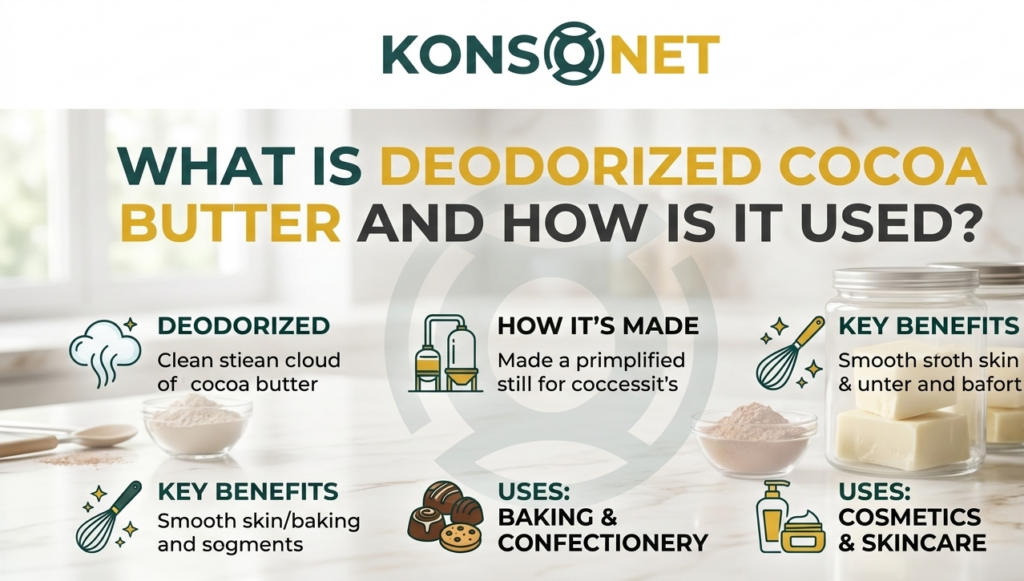
In today’s food, cosmetic, and confectionery industries, ingredient quality matters more than ever. Consumers want purity, consistency, and versatility without compromising flavour or performance. One ingredient quietly powering countless premium products is deodorized cocoa butter.
Whether you are a chocolatier, baker, cosmetic manufacturer, or health conscious buyer, understanding deodorized cocoa butter helps you make better formulation decisions. This guide explains exactly what it is, how it is produced, why professionals prefer it, and how it is used across multiple industries.
Businesses like Konsonetas and their official website konsonet.eu provide high quality cocoa derived ingredients that meet modern manufacturing and culinary standards, making this topic increasingly relevant for professionals worldwide.
Understanding Cocoa Butter: The Foundation
Before exploring deodorized cocoa butter, it helps to understand cocoa butter itself.
Cocoa butter is a natural fat extracted from cocoa beans during chocolate production. After cocoa beans are fermented, dried, roasted, and pressed, two primary products emerge:
- Cocoa solids
- Cocoa butter
Cocoa butter is prized for its smooth texture, stability, and melting behaviour. It melts just below body temperature, which explains why chocolate melts beautifully in the mouth while remaining solid at room temperature.
Key Characteristics of Cocoa Butter
- Pale yellow to ivory colour
- Naturally aromatic with chocolate notes
- High oxidative stability
- Long shelf life
- Excellent emulsifying properties
Traditional cocoa butter carries a natural cocoa aroma and flavour. While this is ideal for chocolate making, many industries require neutrality. That is where deodorized cocoa butter becomes essential.
What Is Deodorized Cocoa Butter?
Deodorized cocoa butter is cocoa butter that has undergone a gentle refining process to remove its natural aroma, taste, and colour impurities while preserving its functional fat structure.
The goal is not to alter the chemistry but to neutralise sensory characteristics.
Simple Definition
Deodorized cocoa butter is purified cocoa butter with:
- Neutral smell
- Neutral taste
- Consistent colour
- Stable performance
This allows manufacturers to use cocoa butter’s functional benefits without influencing flavour profiles.
How Deodorized Cocoa Butter Is Made
The deodorisation process is carefully controlled to maintain quality and nutritional integrity.
Step 1: Extraction
Cocoa beans are pressed to separate cocoa liquor into solids and fat. The fat becomes crude cocoa butter.
Step 2: Filtration and Refinement
Impurities, particles, and residual solids are filtered out to achieve clarity.
Step 3: Deodorisation
Steam distillation under controlled temperature and vacuum conditions removes volatile compounds responsible for aroma and flavour.
This stage:
- Removes cocoa scent
- Reduces acidity
- Improves stability
- Creates uniform quality
High quality suppliers focus on preserving the natural triglyceride structure during this process, ensuring performance remains identical to natural cocoa butter.
Why Deodorized Cocoa Butter Is So Valuable
Neutrality unlocks versatility. Industries choose deodorized cocoa butter because it offers technical advantages that few fats can match.
1. Flavour Control
Manufacturers can add their own flavours without interference from cocoa notes.
2. Consistent Product Quality
Uniform batches ensure predictable texture and melting behaviour.
3. Superior Stability
Cocoa butter naturally resists oxidation better than many vegetable fats.
4. Clean Label Appeal
It remains a recognisable, plant based ingredient aligned with modern clean label trends.
5. Multi Industry Compatibility
One ingredient can serve confectionery, bakery, cosmetics, pharmaceuticals, and nutraceutical sectors.
Industrial Uses of Deodorized Cocoa Butter
Chocolate and Confectionery Applications
Even though it lacks aroma, deodorized cocoa butter remains crucial in chocolate production.
Common uses include:
- White chocolate formulations
- Compound coatings
- Chocolate fillings
- Premium confectionery shells
- Fat standardisation
Manufacturers adjust cocoa butter content to improve snap, gloss, and mouthfeel without altering flavour.
Bakery and Food Manufacturing
In baking, fats influence texture more than taste. Deodorized cocoa butter performs exceptionally well.
Applications include:
- Premium biscuits and wafers
- Fillings and creams
- Pastry fats
- Dairy alternatives
- Ice cream coatings
Because it melts smoothly, it enhances richness without overpowering delicate recipes.
Cosmetics and Personal Care
One of the fastest growing uses is skincare.
Deodorized cocoa butter provides:
- Deep moisturisation
- Skin barrier protection
- Excellent spreadability
- Stable formulations
It is widely used in:
- Body lotions
- Lip balms
- Creams and ointments
- Hair conditioners
- Massage products
The neutral scent allows brands to create customised fragrances without competing cocoa aromas.
Pharmaceutical and Nutraceutical Uses
Its stability and purity make deodorized cocoa butter valuable in medical formulations.
Typical uses:
- Suppository bases
- Controlled release delivery systems
- Nutritional supplements
- Topical therapeutic creams
The predictable melting point makes dosing reliable and safe.
Functional Properties That Make It Unique
Precise Melting Behaviour
Cocoa butter melts between 30°C and 35°C, close to body temperature. This creates luxurious mouthfeel and smooth skin application.
Crystalline Structure
Its stable fat crystals support:
- Chocolate tempering
- Glossy finishes
- Structural firmness
Oxidative Stability
Compared with many vegetable oils, cocoa butter resists rancidity, extending shelf life naturally.
Compatibility with Other Fats
It blends well with:
- Milk fats
- Vegetable fats
- Plant oils
- Specialty emulsifiers
Sustainability and Ethical Sourcing
Modern buyers increasingly consider ingredient sourcing.
Responsible suppliers prioritise:
- Sustainable cocoa farming
- Ethical sourcing practices
- Traceable supply chains
- Quality controlled processing
Working with trusted ingredient specialists such as Konsonetas, accessible via konsonet.eu, ensures consistent sourcing standards aligned with industry expectations.
How Manufacturers Choose High Quality Deodorized Cocoa Butter
Professionals evaluate several factors before purchasing.
Purity and Refinement Standards
Look for:
- Food grade certification
- Controlled deodorisation methods
- Minimal processing damage
Consistency
Uniform melting profile and colour consistency are essential for large scale production.
Origin Transparency
Traceability supports both sustainability claims and product reliability.
Technical Support
Reliable suppliers provide documentation, specifications, and formulation guidance.
Storage and Handling Best Practices
To maintain quality:
- Store in cool, dry environments
- Avoid direct sunlight
- Maintain stable temperatures below 25°C
- Prevent moisture exposure
Proper storage preserves texture, prevents oxidation, and extends usability.
Nutritional Profile of Deodorized Cocoa Butter
Although primarily used for functionality, cocoa butter also offers nutritional attributes.
It contains:
- Stearic acid
- Oleic acid
- Palmitic acid
- Natural antioxidants
Stearic acid behaves differently from many saturated fats, making cocoa butter unique in lipid chemistry discussions.
Common Myths About Deodorized Cocoa Butter
Myth 1: It Is Artificial
Deodorized cocoa butter remains a natural cocoa derived ingredient. The process removes aroma compounds but does not create synthetic fat.
Myth 2: It Loses Functional Benefits
All key physical properties remain intact after deodorisation.
Myth 3: It Is Only for Cosmetics
Food manufacturers widely depend on it for flavour neutral applications.
Future Trends Driving Demand
The global demand for deodorized cocoa butter continues to grow due to evolving consumer expectations.
Emerging trends include:
- Plant based product innovation
- Premium confectionery experiences
- Clean label cosmetics
- Functional foods and nutraceuticals
- Vegan formulations
As formulation complexity increases, neutral yet high performance fats become increasingly valuable.
Why Businesses Trust Reliable Ingredient Partners
Ingredient sourcing directly impacts product quality and brand reputation.
Professional suppliers such as Konsonetas focus on:
- Consistent batch quality
- Reliable sourcing networks
- Industry compliant processing
- Technical reliability
Manufacturers exploring cocoa derived ingredients can learn more through konsonet.eu, where specialised cocoa solutions support diverse industry applications.
Frequently Asked Questions About Deodorized Cocoa Butter
1. Does deodorized cocoa butter still contain cocoa nutrients?
Yes. The deodorisation process removes aroma compounds but retains the core fatty acid structure and functionality.
2. Is deodorized cocoa butter vegan?
Yes. It is entirely plant based and suitable for vegan formulations.
3. Can it replace regular cocoa butter in chocolate?
Yes, especially when flavour neutrality is required, such as white chocolate or flavoured confectionery.
4. Why is it preferred in cosmetics?
Its neutral scent allows manufacturers to add fragrances without interference while maintaining excellent moisturising performance.
5. Does deodorization involve chemicals?
High quality processing uses controlled steam treatment rather than chemical modification.
6. How long does deodorized cocoa butter last?
When stored correctly, it typically maintains stability for 18 to 24 months.
7. Is deodorized cocoa butter healthier than other fats?
It offers strong stability and unique fatty acid composition, making it suitable for many formulations when used appropriately.
8. What industries use deodorized cocoa butter most?
Confectionery, bakery, skincare, pharmaceutical, and nutraceutical sectors rely heavily on it.
9. Does it affect product texture?
Yes, positively. It improves smoothness, melting quality, and structural consistency.
Conclusion: A Neutral Ingredient With Powerful Possibilities
Deodorized cocoa butter represents the perfect balance between nature and precision processing. By removing aroma while preserving functionality, it becomes one of the most versatile fats available today.
From luxury chocolate textures to advanced skincare formulations, its performance continues to shape modern product innovation. Manufacturers seeking consistency, flexibility, and premium quality increasingly rely on trusted suppliers who understand both science and sourcing.
Konsonetas, available at konsonet.eu, provides access to carefully refined cocoa ingredients designed for professional applications across food, cosmetic, and industrial sectors.
Choosing deodorized cocoa butter is not simply about removing flavour. It is about gaining total creative control while maintaining natural excellence.
Discover how high quality cocoa ingredients can transform your formulations today by exploring konsonet.eu and elevate your next product innovation with confidence.